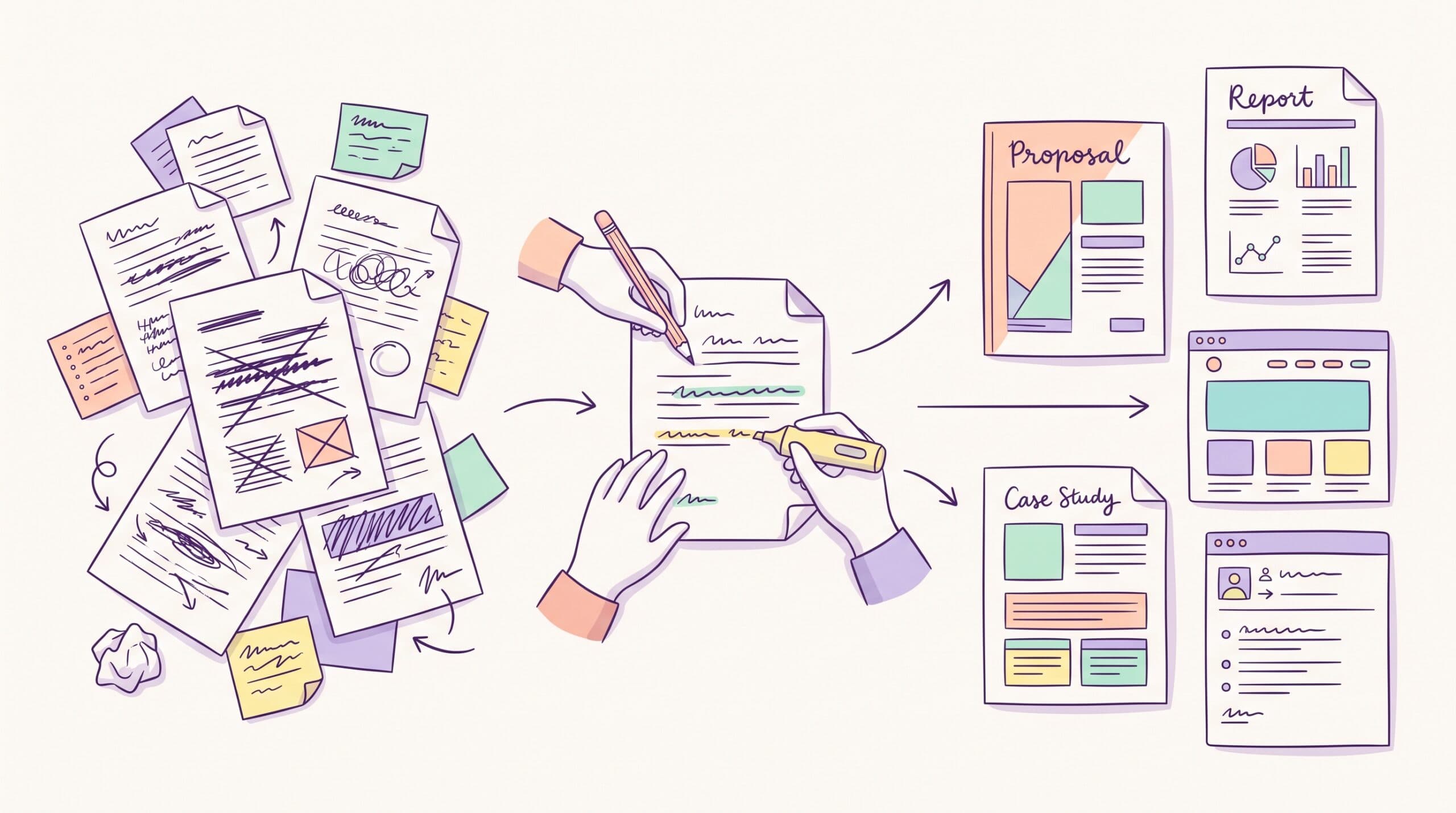
You’re staring at a backlog that has not moved in three weeks.
Your strategist, who should be planning the content engine, is stuck writing first drafts because nobody else can.
And somewhere in the mix, there’s a board slide asking why organic traffic has not moved. You know the articles that could help, if anyone had time to write them.
That is usually the real moment behind this question: “Should I hire a content writer?”
A bottleneck exists. It has a business cost. And you have to decide whether hiring a content writer is the right fix.
This article will help you figure out how to answer that question and resolve that bottleneck.
Quick answer
Hire a content writer when you have valuable search opportunities sitting untouched because nobody on your team has the time, specialized skill, or bandwidth to turn them into publish-ready content.
For B2B SaaS teams, that usually shows up as one of five situations: your backlog has outgrown your execution capacity, your strategist is stuck writing instead of planning, the content needs specialist judgment your team doesn’t have in-house, you’re testing a new content motion before committing to a full-time hire, or your team’s expertise is trapped in people who don’t have time to write it down.
A writer should make the operation lighter. If you can’t point to which of these five situations you’re in, fix that before you hire.
1. Your backlog has outgrown your team’s execution capacity
This is the most common version of the problem, and it’s rarely about ideas.
Most SaaS marketing teams know exactly which topics to cover.
The keyword research is done. Sales has flagged the recurring objections. Product has a list of use cases nobody’s written up.
But there just aren’t enough hours to create the content.
Here’s where this problem gets expensive.
Right now, your competitors may have created and ranked pages for terms like “[your product] alternatives” or “best [your category] software for [your audience].”
Those articles are helping your competitors capture buyers who are already comparing tools.
Every month that page doesn’t exist for your brand is a month you’re not in that comparison.
Here’s where I’d start: list the ten topics in your backlog that are closest to revenue. Not the ten with the highest search volume. The ten that match how buyers compare, evaluate, and make decisions.
That list will tell you whether you need more brainstorming or more execution.
A writer fixes this by taking the topics you’ve already prioritized and turning them into shipped articles, without forcing you to lower your quality bar to get speed.
2. Your strategist is stuck writing instead of planning
Another clear sign you need to bring an extra writer on is that your best writer is also your strategist. And they’re spending most of the week on first drafts instead of the job you need them doing.
A content strategist should decide what to publish, which pages need refreshing, how content maps to the buyer journey, and how your brand shows up in Google and AI search results.
If that person is heads-down writing, here’s what stops happening: search intent analysis gets shallower, briefs get thinner, content refreshes get skipped, and nobody’s checking how your product appears when someone asks ChatGPT to compare tools in your category.
The mistake I see most often is treating writing as a task anyone can pick up, then relying on the strategist to fix every draft, which turns out not to be true.
The fix is to give your strategist a writer who can turn a clear brief, audience, product angle, and internal link path into a publish-ready draft without six rounds of rescue edits.
The strategist owns direction while the writer owns the draft.
That split is what turns outsourcing into leverage rather than another thing to manage.
3. The content needs judgment that your team doesn’t have in-house
Not every writer should write every type of content.
For B2B SaaS, the highest-value organic opportunities usually sit closest to the buying decision. Content like comparison pages, alternative articles, product-led tutorials, use-case guides, and buyer guides.
These need a different skill than general blog writing.
A comparison page has to help buyers see real tradeoffs without reading like a competitor takedown. A general SEO writer who knows how to structure a ranking post but waits until the CTA to mention the product will miss the job this content is supposed to do.
You shouldn’t frame this hire as “bringing someone in to write content.” Instead, it should be that you’re bringing someone in to help a buyer make progress.
That changes what you’re looking for.
Can they explain a tradeoff clearly? Can they work product context into an article without it reading like a sales deck? Can they understand when the article should push for a demo, a trial, or another internal click?
Those decisions sound small until you see the draft.
Then they become the difference between content that helps buyers choose and content that fills space on the blog.
4. You’re testing a content motion before committing to a full-time hire
A senior freelance writer is often the right middle step between “we need more help” and “we’re ready for a full-time hire.”
This shows up most clearly around inflection points: a new category push, a funding announcement, a backlog of high-intent keywords leadership wants live now, or simply wanting to test whether comparison pages can support your pipeline before building a full BOFU content program around them.
A full-time hire at this stage is often premature. You don’t yet know the right specialization, volume, or cadence to hire for.
Agencies, at this stage, might also be too expensive or too much of a commitment.
I would not hire a full-time writer just because the next quarter looks busy. That can work, but it can also leave you with a permanent hire before you understand the actual shape of the need.
A senior freelancer gives you real execution without a permanent role, a management layer, or a long onboarding process.
You can start with a single paid trial piece, test the working relationship, review the quality, and decide whether to scale it.
That is a cleaner way to determine what kind of writing support you need before building a role based on assumptions.
5. Your team’s expertise is trapped in people who can’t write it down
Most SaaS teams have more usable content than they realize.
It’s scattered across sales call notes, demo recordings, product docs, support tickets, Slack threads, and the heads of people who have zero time to turn it into an article.
Sales knows the three objections that come up whenever prospects compare you to a specific competitor. Support knows the two features customers most often misunderstand. Product knows which use case actually sells the tool, even if it’s not the one in the homepage copy.
All of this untapped expertise is what makes content useful.
A good B2B SaaS writer extracts that expertise through interviews and research, then turns it into comparison sections, FAQs, product-led examples, and objection-handling content.
Many teams miss this because they think the writer’s job starts in the Google Doc. It doesn’t.
The real work often starts before the draft exists: finding useful product insights, asking better questions, and turning internal knowledge into something a buyer can understand.
That specificity also gives AI search tools better material to cite when buyers ask what to choose.
Don’t hire yet if the strategy isn’t there
A writer can’t rescue a content program that doesn’t know what it’s trying to do.
If you can’t say who the content is for, what business goal it supports, or what the product angle is, fix that first.
Hiring a writer to compensate for an unclear strategy only shifts the point of failure. You’ll end up blaming a draft for a decision that was broken before the outline existed.
I would not prioritize hiring until you can answer three questions:
- What should this content help the business do?
- Who needs to read it?
- What should the reader understand or do after reading?
You don’t need a perfect strategy deck. But you do need enough direction for the writer to make smart decisions.
What to have ready before you hire
You need five things: a clear goal, the topic or keyword, who you’re writing for, enough product context for the writer to work with, and someone designated to give feedback.
That is the minimum.
The better version includes internal links, CTA direction, competitor pages, product screenshots, SME notes, and examples of articles you like or dislike.
If there’s a backlog you’re staring at right now
The best time to hire a content writer is when you already know which topics could support the business, but your team does not have the bandwidth to write them well.
That is where I fit.
I’m a freelance writer for B2B software companies. I help marketing teams create bottom-funnel content and refresh content that gets found, helps the reader, and supports the business’s goals.
Have a high-intent topic sitting in your backlog? Book a 30-minute call, and let’s see if I can help.