Content Strategy Consultant for B2B SaaS
If you’ve ever done a big grocery shop without a list, you know how it ends. The cart fills up, the bill is bigger than you planned, and you still get home without the ingredients for dinner. A lot of B2B SaaS content programs run the same way. Writers and agencies keep the calendar full, the blog keeps growing, and when leadership asks which deals content brought in, nobody can point to one.
A content strategy consultant writes the list before anyone goes shopping. I research your buyers, audit what you’ve already published, and hand your team a roadmap that puts the pages closest to a purchase first. I do this as a content strategist and writer, and a best-of article I wrote for Softr reached about $130K a month in traffic value at its peak, by Semrush’s estimate. Below, you’ll see what you get, how an engagement runs, and what it costs.
TL;DR
- A content strategy consultant decides which content to create, in what order and how to measure it, while your writers, your agency or I produce it.
- An engagement starts with buyer research and an audit and ends with a roadmap your team can run.
- Pricing starts from $1,500 for the roadmap and report, and it climbs as you add advisory, briefs, editing or writing.
- It fits teams that publish steadily but can’t tie their content to pipeline.
What does a content strategy consultant do?
A content strategy consultant decides what content a company should create, who each piece is for, the order it gets published in, and how the team will know it worked. The consultant owns the plan, while your writers, an agency or the consultant can handle production.
For a B2B SaaS team that already has writers, the work usually covers four areas.
- Learning what buyers need. What your buyers search and ask before they talk to sales, pulled from sales calls, support tickets, review sites and Search Console.
- Fixing what you’ve published. An audit finds the pages that already rank or used to bring in leads, so they get refreshed before anyone writes something new.
- Choosing what to build next. The comparison, alternatives and pricing pages people read right before they buy usually come first, because they sit closest to a demo.
- Agreeing how to measure it. You settle the measures up front, so the report you take to leadership shows demos and pipeline instead of sessions.
Signs you need a content strategy consultant
Teams usually start looking for a consultant when one of these problems shows up in a quarterly review.
- Traffic grows, but pipeline doesn’t. The blog report looks healthy, and sales still can’t name a deal that started with an article.
- The calendar is full, but nobody can explain it. Writers or an agency publish every week, and when leadership asks why those topics, the only answer is that they had search volume.
- Old pages are slipping. Posts that used to bring in leads are losing positions in Search Console, and nobody owns the decision to refresh, merge or retire them.
- You’re about to spend more on production. You’re hiring writers or signing an agency, and you want the plan settled before the invoices start.
- AI answers name other brands. When buyers ask ChatGPT or AI Overviews about your category, other companies get recommended and yours doesn’t.
What you get from a content strategy engagement
Every engagement starts with the same base, which is the roadmap and the report behind it. To go back to the grocery shop, this is the list, along with a note of what’s already in the fridge.
- Buyer research. What your buyers search for, ask about and object to, pulled from sales and support conversations, review sites and your own Search Console data.
- A content audit. Your existing pages reviewed for traffic trends, rankings and overlap, with a keep, refresh, merge or retire call on each one.
- A buyer-intent keyword map. Topics grouped by buying stage, from problem-aware searches to comparisons and pricing, with the page type each one needs.
- Competitor gaps. What other companies in your category rank for and get cited for that you don’t, and which of those gaps to close first.
- An AI search baseline. The questions your buyers ask ChatGPT, Perplexity and AI Overviews, which brands get named today, and which pages those answers cite.
- A 90-day roadmap. A prioritized plan your team can follow, with the pages closest to revenue scheduled first.
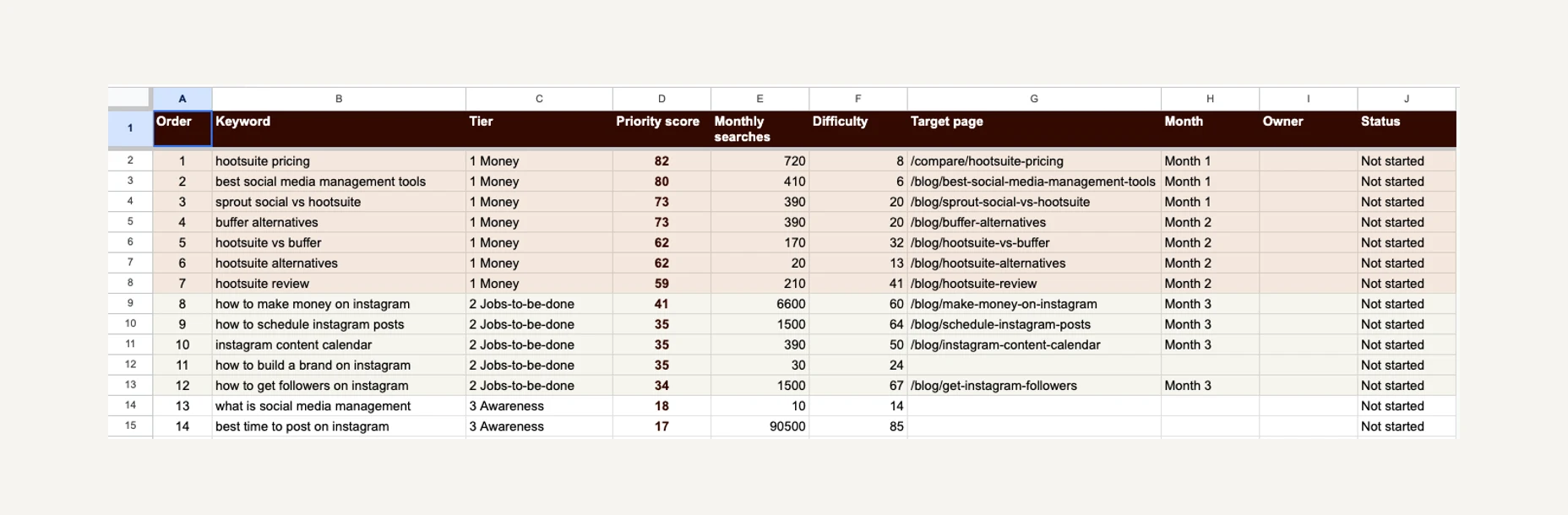
From there, you choose how much help you want while the plan runs. Some teams take the roadmap and run it with their own writers. Others add advisory, where I stay on while your team works through the plan and help when priorities shift or results come in. You can also add briefs for your writers, editing for the drafts they produce, or have me write the pages closest to a purchase myself.
How a content strategy engagement works
The process is the same whether you want only the roadmap or the roadmap plus ongoing help.
- Discovery call. We talk through your goals, your buyers, your offer, and what content needs to do for the business.
- Access and data. You share Search Console, a list of the companies you lose deals to, and any analytics or CRM data you want the plan tied to.
- Audit and research. I review your existing pages, map buyer-intent searches and AI prompts, and compare what other companies in your category rank and get cited for.
- Roadmap and report. I turn the findings into a 90-day plan ranked by pipeline impact and effort.
- Handoff. We walk through the plan together, and you decide whether to run it in-house, add advisory, or bring me in for briefs, editing or writing.
The roadmap usually takes about three weeks, or about five for a larger content library. Your team’s part is mostly the discovery call, sharing access and reviewing the plan before it’s final, so it shouldn’t pull your writers away from their work.
How much does a content strategy consultant cost?
My content strategy consulting starts from $1,500 for the roadmap and report. The price climbs as you add advisory, briefs, editing or writing, and every project starts with a quote that lists what’s included, so you know the total before any work begins.
Back at the grocery store, the list is the cheap part. The expensive part is everything that goes into the cart without one, which in content means months of writer or agency time spent on pages that were never likely to bring in a demo.
For context, a full-time content strategist in the US costs about $111,000 a year once benefits are added, and content agencies start around $5,000 a month at published prices. Pricing here is per project rather than per hour, so you can compare it directly with an agency retainer or a new hire.
Results from my content strategy and writing work
A roadmap is only as good as the pages it puts first, so here’s what that work has produced on my own site and for the companies I’ve written for.
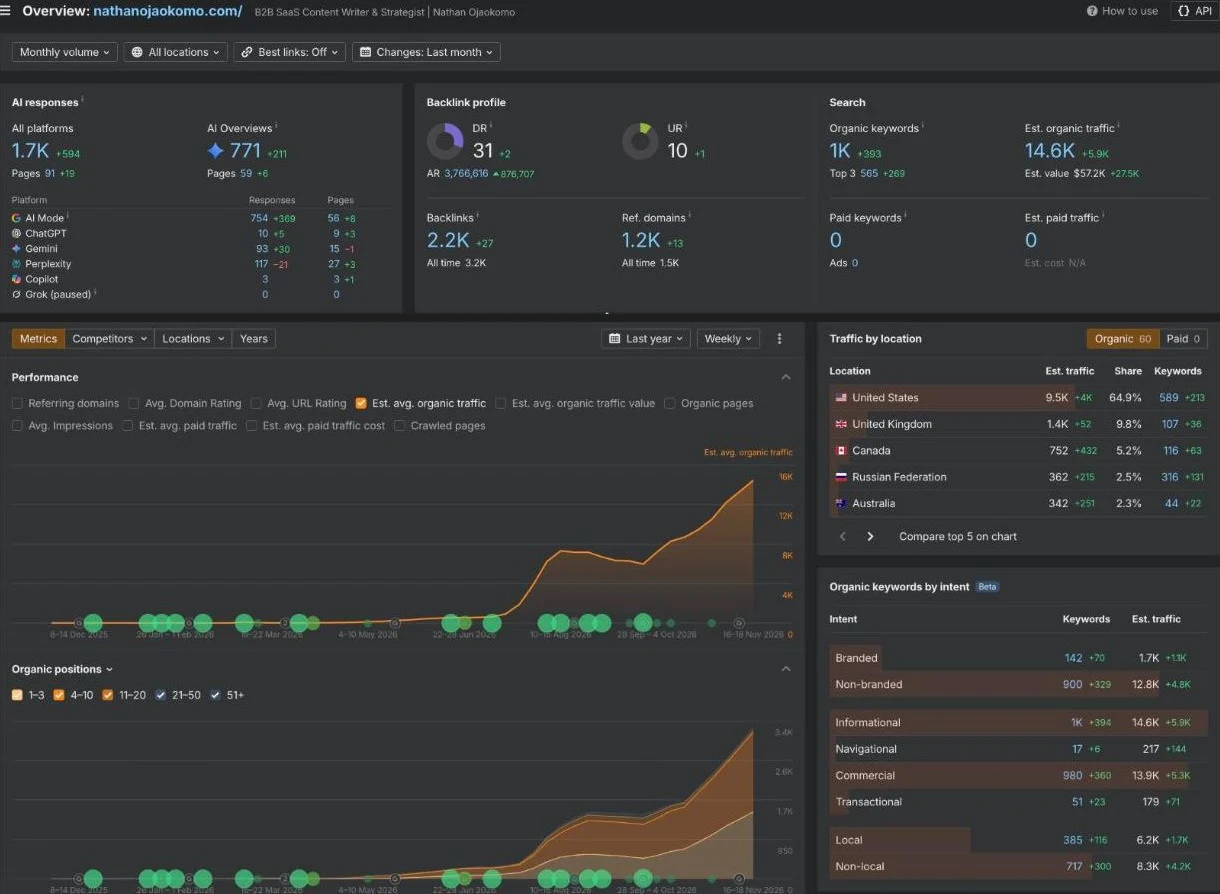
- My own site. Ahrefs’ estimate of nathanojaokomo.com’s monthly organic traffic went from 557 in mid-June 2026 to 14,467 in November. The site now ranks for about 1,000 keywords, 565 of them in the top three, and 13.9K of that 14.6K estimated traffic comes from searches Ahrefs tags as commercial, the kind people make when they’re comparing options. Ahrefs also counts 1,700 AI answers that cite the site, 771 of them in AI Overviews.
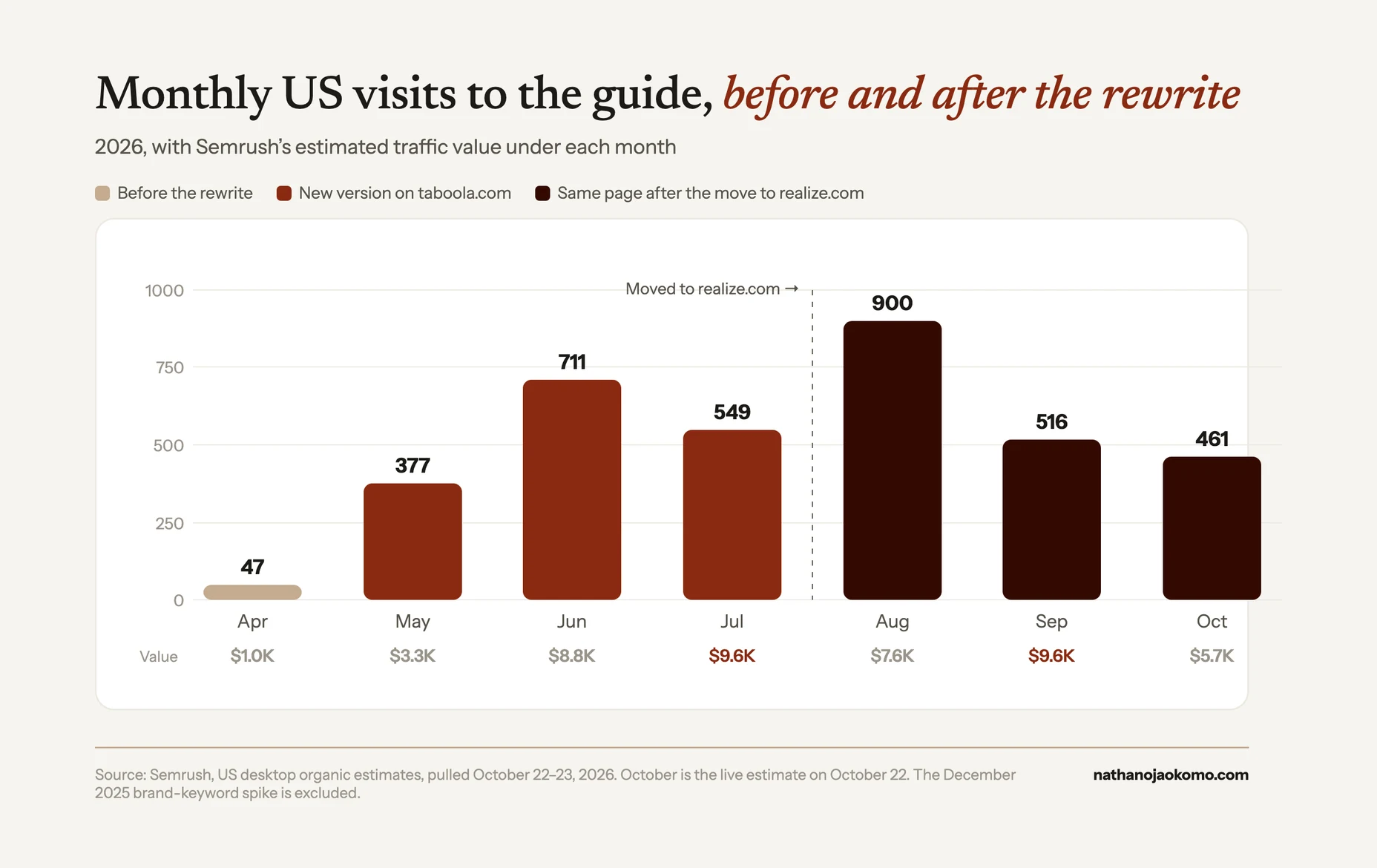
- Taboola. I rewrote Taboola’s native advertising platforms page, which was getting about 47 visits a month, and it went to #1 on Google.
- Softr. The best knowledge management software article I wrote for Softr reached about $130K a month in traffic value at its peak, by Semrush’s estimate.
- An agency client. One listing in a roundup on my own site brought an agency a $36K ARR deal.
- Zapier. An article I wrote for Zapier reached #1 and saves the company more than $20,000 a year in ad spend.
Content strategy consultant vs agency vs in-house
A consultant isn’t the right fit for every team, and the table shows where each option tends to work best.
| Content strategy consultant | Content agency | In-house strategist | |
|---|---|---|---|
| What you get | A plan your team runs, plus advisory or production if you add it | A team that plans and produces the content | One person embedded full-time |
| Cost | From $1,500 for a roadmap with me | From about $5,000 a month at published prices | About $111,000 a year with benefits |
| Time to start | Usually within two weeks | A few weeks of onboarding | Months of recruiting and ramp-up |
| Best fit | Teams with writers but no plan | Teams that need volume and have the budget | Teams where content is a core, permanent function |
If you’re comparing freelancers with agencies, the red flags and questions to ask before you hire a strategist apply to both.
How to choose a content strategy consultant
Plenty of people call themselves content strategy consultants, so check a few things before you sign.
- B2B SaaS buying-cycle experience. Long sales cycles and several decision-makers change which pages deserve attention first, so ask for examples from software companies.
- Bottom-of-funnel pages in their work. Comparison, alternatives and pricing pages are where content turns into demos, so their portfolio should include them.
- A sample roadmap. Even with client names removed, a past roadmap shows how they rank priorities and whether each page is tied to a goal.
- Measurement beyond traffic. Ask how they’d report results to your leadership, and listen for signups, demos and pipeline in the answer.
- A clear scope and price. You should know what the roadmap includes and what each add-on costs before you commit.
Need a content plan your team can run?
If your writers or agency publish steadily and you still can’t tie content to pipeline, book a call with me.
Book a callFrequently asked questions
How much does a content strategy consultant charge?
My content strategy consulting starts from $1,500 for the roadmap and report, and the price climbs as you add advisory, briefs, editing or writing. For comparison, a full-time content strategist in the US costs about $111,000 a year with benefits, and content agencies start around $5,000 a month at published prices.
Do you charge by the hour?
No. Pricing is per project, with a quote that lists what’s included, so you know the total before any work starts.
How long does a content strategy project take?
The roadmap usually takes about three weeks, or about five for a larger content library. Advisory, briefs, editing and writing continue for as long as you need them.
Do you write the content too?
Yes, if you want me to. I’m a content strategist and writer, so I can write the pages closest to a purchase while your team covers the rest, or you can keep all production in-house and add advisory instead.
Can you work alongside our writers or agency?
Yes. The roadmap is built for whoever produces your content, and briefs and editing are there for teams that want help getting drafts to match the plan.
How do you measure whether the strategy is working?
We agree on the measures before the roadmap is final, usually demos, signups or pipeline from the pages on the plan, plus leading signals such as rankings and AI citations for those pages. Pipeline from brand-new pages usually takes four to six months to show up, so the early reviews focus on the leading signals.
What’s the difference between a content strategy consultant and a content marketing consultant?
A content strategy consultant focuses on the plan, meaning which content to create, in what order and how to measure it. A content marketing consultant usually covers the plan plus production and distribution, such as writing, publishing and promotion.